Hendrik Dirk Kruseman van Elten
Highlights from the life and career of a Dutch-American artist of the 19th century.
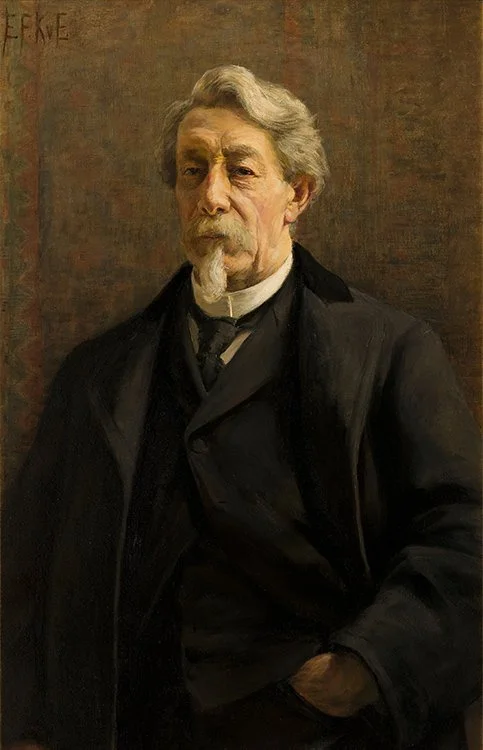
Elisabeth Frederica Kruseman van Elten, Portrait of Hendrik Dirk Kruseman van Elten, 1900. Stedelijk Museum Alkmaar (021118).
Hendrik Dirk Kruseman van Elten (14 November 1829 – 12 July 1904) was a Dutch-born landscape painter and etcher who spent most of his career in the United States, having immigrated to New York City in 1865. Trained in the Dutch landscape tradition, he became part of the artistic community centered around the Tenth Street Studio Building⁽¹⁾ in Greenwich Village, which included prominent members of the Hudson River School. He was a regular exhibitor at many institutions and exhibitions, including the National Academy of Design, which elected him a National Academician in 1883.⁽²⁾
Van Elten painted and etched landscapes in the Netherlands and the United States, typically depicting rural life in pastoral scenery. His career bridged the Dutch and American art worlds, and by the 1880s he had gained recognition on both sides of the Atlantic, especially for his etchings. His works are held in museum collections in Europe and the United States.⁽³⁾
Early Life and Training
Van Elten was born in Alkmaar, Netherlands, on 14 November 1829, the son of notary Daniël Nicolaas van Elten and Elisabeth Frederica Kruseman.⁽⁴⁾ Through his mother, he belonged to the Kruseman family, which produced several prominent Dutch artists of the nineteenth century.⁽⁵⁾
An 1893 biographical profile by the painter and writer Hendrik Maarten Krabbé recounts that Van Elten’s father initially opposed his desire to become an artist, intending him for a more conventional profession. Because Van Elten was frequently ill as a child, however, a physician advised his father to allow him to follow his artistic interests rather than prepare for a more traditional career.⁽⁶⁾
After several years of drawing instruction under Jan Reekers in Alkmaar, Van Elten approached the landscape painter Cornelis Lieste.⁽⁷⁾ According to Krabbé, Lieste told the aspiring artist that he had little natural talent and would require five years of study in his studio. Van Elten nevertheless became his pupil, and Lieste revised his assessment after the first year. Krabbé described Van Elten's training as unusually rigorous, combining intensive drawing with prolonged study from nature.⁽⁸⁾
After completing his training with Lieste, Van Elten worked at Oosterbeek and nearby Wolfheze, where a colony of landscape painters had gathered to study and paint directly from nature. Sometimes described as the “Dutch Barbizon,” the Oosterbeek circle included artists who would later become associated with the Hague School.⁽⁹⁾
Painting en plein air became central to Van Elten's practice. At some point in the 1850s, Van Elten's prolonged outdoor sessions in all weather contributed to an illness that left him almost completely deaf for the rest of his life.⁽¹⁰⁾
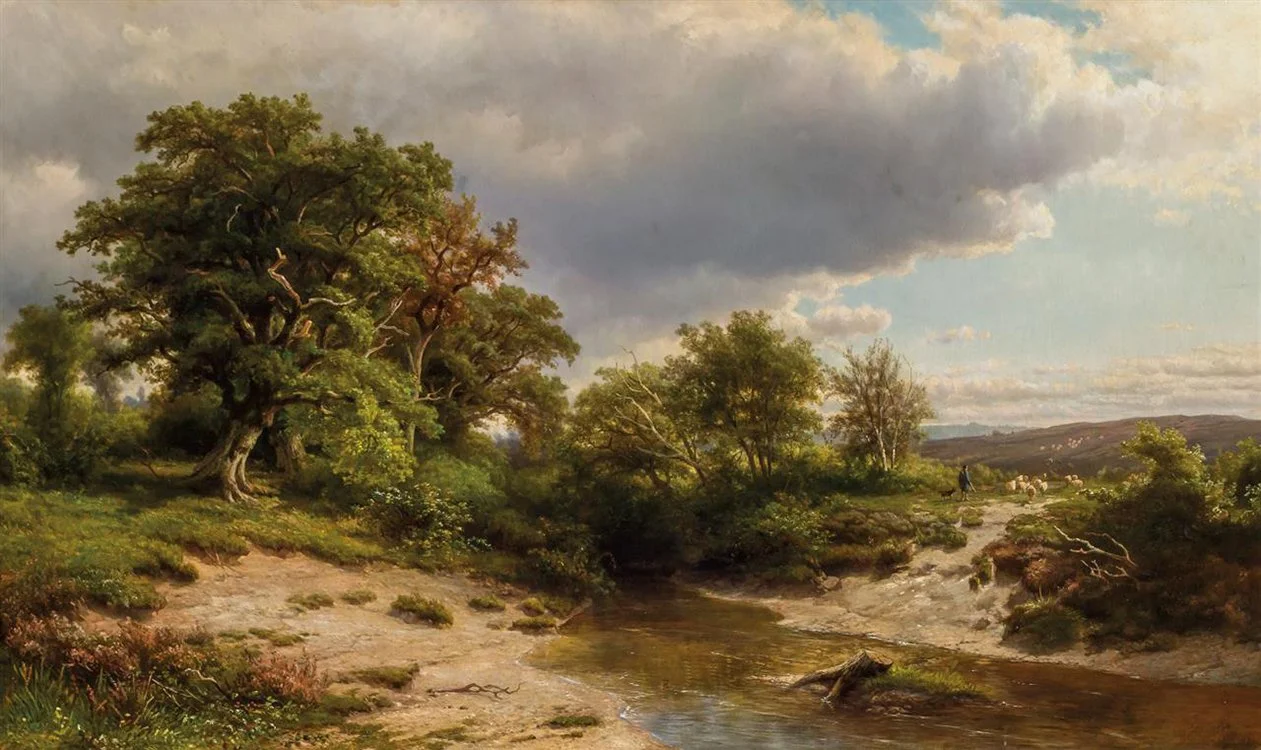
Shepherd by the Stream, ca. 1870–1880. Oil on canvas, 40.0 × 67.5 in. Private collection.
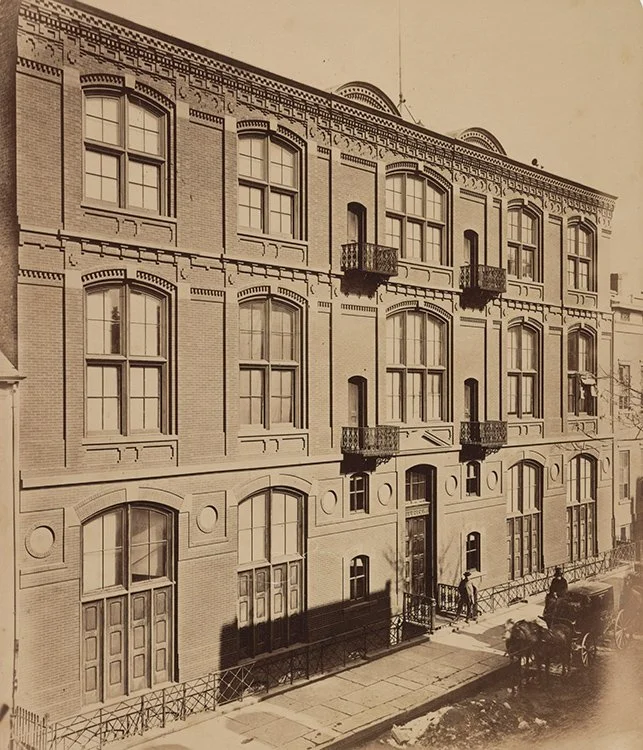
Tenth Street Studio Building, New York, ca. 1875. Library of Congress.
Career
By the early 1860s, Van Elten was an established landscape painter in the Netherlands, associating with artists such as Mauritz de Haas and Paul Joseph Constantin Gabriël. He earned a gold medal at the International Exhibition in Amsterdam in 1860, and was elected a member of the Royal Academy of Fine Arts in Amsterdam in 1861 and the Academy of Fine Arts and Technical Sciences in Rotterdam in 1862.⁽¹¹⁾
Van Elten emigrated to New York City in 1865, believing that the larger American market offered greater opportunities and a better chance at financial security. He would later return to Europe multiple times to paint and travel.⁽¹²⁾
After settling in New York, Van Elten painted throughout New York State and New England, depicting rural, pastoral landscapes while retaining subjects and stylistic choices associated with the Dutch landscape tradition. In March 1868, he sent a large autumn landscape of the Shawangunk Mountains to an exhibition in Utica, New York, where it sold for $3,000 (approximately $71,185 USD in 2026).⁽¹³⁾
Mauritz de Haas introduced Van Elten to a community of American and European-born artists working in the Tenth Street Studio Building in Greenwich Village, the center of the New York art world at the time. Designed specifically to house artists and their studios, the building was home to a number of prominent American painters including Albert Bierstadt, Frederic Edwin Church, Martin Johnson Heade, and other notable artists associated with the Hudson River School. By 1870, Van Elten, De Haas and the younger American landscape painter James Craig Nicoll shared a double studio in the building, and Van Elten would remain connected to its artistic community for much of his American career.⁽¹⁴⁾
Van Elten began exhibiting at the National Academy of Design in 1866 and became a regular contributor to its annual exhibitions. The Academy elected him an Associate National Academician in 1871 before making him a full academician in 1883. Additionally, he exhibited widely at institutions and exhibitions across the United States throughout his career.⁽¹⁵⁾
In 1873, Van Elten sold the contents of his New York studio and returned temporarily to Europe. He married Margaretha Rudolpha Westerman Holstijn in Amsterdam on 9 July 1874 and returned to New York the following year. Their daughter, Elisabeth Frederika Kruseman van Elten, who would later follow in her father’s footsteps by becoming a painter, was born in New York on 3 April 1875.⁽¹⁶⁾
At the 1876 Centennial Exhibition in Philadelphia, Van Elten served as a commissioner for the Dutch art section while also exhibiting in both the American and Netherlands sections. He helped secure eleven awards for Dutch painters, and his service to the exhibition was subsequently recognized by the Netherlands with his appointment to the Order of the Netherlands Lion.⁽¹⁷⁾
Van Elten's principal New York dealer was William Macbeth, who later established the influential Macbeth Gallery. Van Elten was known to advise Macbeth in the purchase of Dutch old master paintings, drawing on his knowledge of European art.⁽¹⁸⁾
In his early training under Cornelis Lieste, considerable emphasis was placed on drawing. When Van Elten began etching in the late 1870s, those drawing skills served him well. He quickly earned acclaim as an etcher and became active in the American Etching Revival, then gaining momentum in the United States. His etchings appeared in exhibitions and publications alongside those of such artists as Thomas Moran, Mary Nimmo Moran, Samuel Colman, and James David Smillie.⁽¹⁹⁾
In the late 1870s and early 1880s, Van Elten became a member of the New York Etching Club, the American Water Color Society, and the Society of Painter-Etchers in London.⁽²⁰⁾
Van Elten continued to exhibit paintings as his reputation as an etcher grew. He worked extensively in New York State and New England, maintaining a summer home in Ellenville, New York, from which he painted and etched the surrounding Rondout Valley.⁽²¹⁾
Van Elten maintained close ties with the Netherlands throughout his career. In 1892, he sent a collection of seventy etchings to the Stedelijk Museum Alkmaar, where they became an important part of the museum's holdings. The following year, H. M. Krabbé observed that Van Elten had achieved greater recognition as an etcher than as a painter.⁽²²⁾
In July 1897, Van Elten left the United States and settled with his family in Paris. He remained professionally active, continuing to exhibit his work in Europe while maintaining connections to the American art world. His daughter Elisabeth also pursued an artistic career in Paris, studying painting and beginning to exhibit at the Paris Salon. Her first documented exhibit was a portrait of her father.⁽²³⁾
Van Elten died in Paris on 12 July 1904, aged 74, and was buried in his native Alkmaar.⁽²⁴⁾
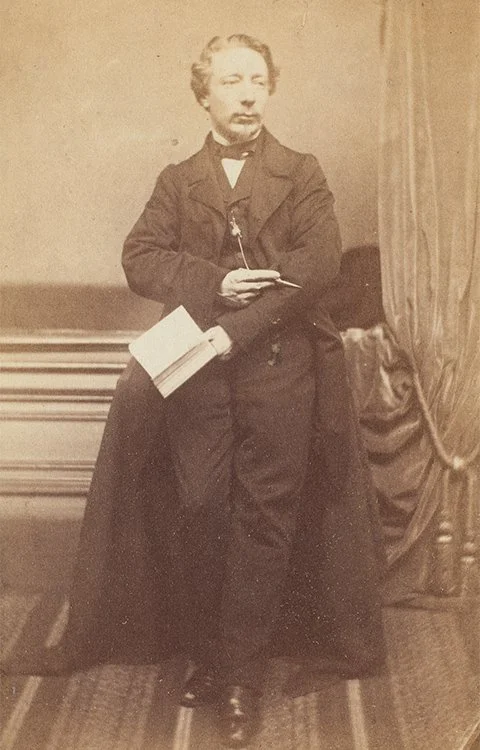
Maurits Verveer, Portrait of Hendrik Dirk Kruseman van Elten, ca. 1880. Photograph. Amsterdam Museum (KA 6895.150).
Art and Critical Reception
Van Elten worked primarily as a landscape painter and etcher, depicting woodlands, rivers and streams, fields, farms, and vernacular buildings drawn from life throughout the Netherlands and the United States. Despite living in New York City for much of his career and witnessing a period of rapid industrialization, his work often seems to demonstrate an appreciation for old-world traditions, depicting figures engaged in rural life and work within pastoral landscapes.⁽²⁵⁾
His long career occupied a position between Dutch and American landscape traditions, applying an artistic vocabulary formed in the Netherlands to the scenery he encountered during more than three decades in the United States.⁽²⁶⁾
In September 1880, art critic S. R. Koehler devoted an installment of his series The Works of the American Etchers to Van Elten in The American Art Review, and in the following year wrote another article on his new etchings.⁽²⁷⁾
H. M. Krabbé, writing in 1893, praised the sensitivity of Van Elten's studies from nature, but believed that the rigorous training of his youth sometimes caused his more fully developed works to become overly elaborate and lose some of the freshness of his initial studies. At the same time, Krabbé observed that Van Elten's later paintings increasingly emphasized atmosphere, tone, and overall effect, reflecting the artist's continuing engagement with newer developments in landscape painting.⁽²⁸⁾
In 1879, the American writer George W. Sheldon described Van Elten as “one of our most conscientious and faithful students of nature.”⁽²⁹⁾
Collections and Legacy
Van Elten's work is held in public collections in both the United States and the Netherlands, including the National Gallery of Art in Washington, D.C., the National Academy of Design in New York, the Rijksmuseum in Amsterdam, and Stedelijk Museum Alkmaar.⁽³⁰⁾ His widow, Margaretha Rudolpha Westerman Holstijn, contributed to the preservation of his work after his death, donating twelve etchings and ten oil sketches to the National Academy.⁽³¹⁾ In 1905, she also presented Van Elten's painting Autumn to the Metropolitan Museum of Art.⁽³²⁾
Van Elten's work has received renewed attention in the Netherlands. The collection of seventy etchings that he sent to the city's museum in 1892 survives at Stedelijk Museum Alkmaar and represents a substantial survey of his work as a printmaker. In 2021, the museum presented the complete group together for the first time in the exhibition Hendrik Dirk Kruseman van Elten: Een Alkmaarder in New York (“An Alkmaarder in New York”). The exhibition emphasized Van Elten's transatlantic career and the continuing influence of Dutch landscape traditions on his depictions of American scenery.⁽³³⁾
Van Elten was also featured in an exhibition examining the wider Kruseman artistic family. The 2014–2015 exhibition Kruseman: Kunstbroeders uit de romantiek (Kruseman: Artistic Relatives of the Romantic Era), organized by Museum Jan Cunen and Stedelijk Museum Alkmaar, brought his work into the context of the several nineteenth-century artists on his mother's side of the family.⁽³⁴⁾
Researched and written by Blake Manning, 2026.
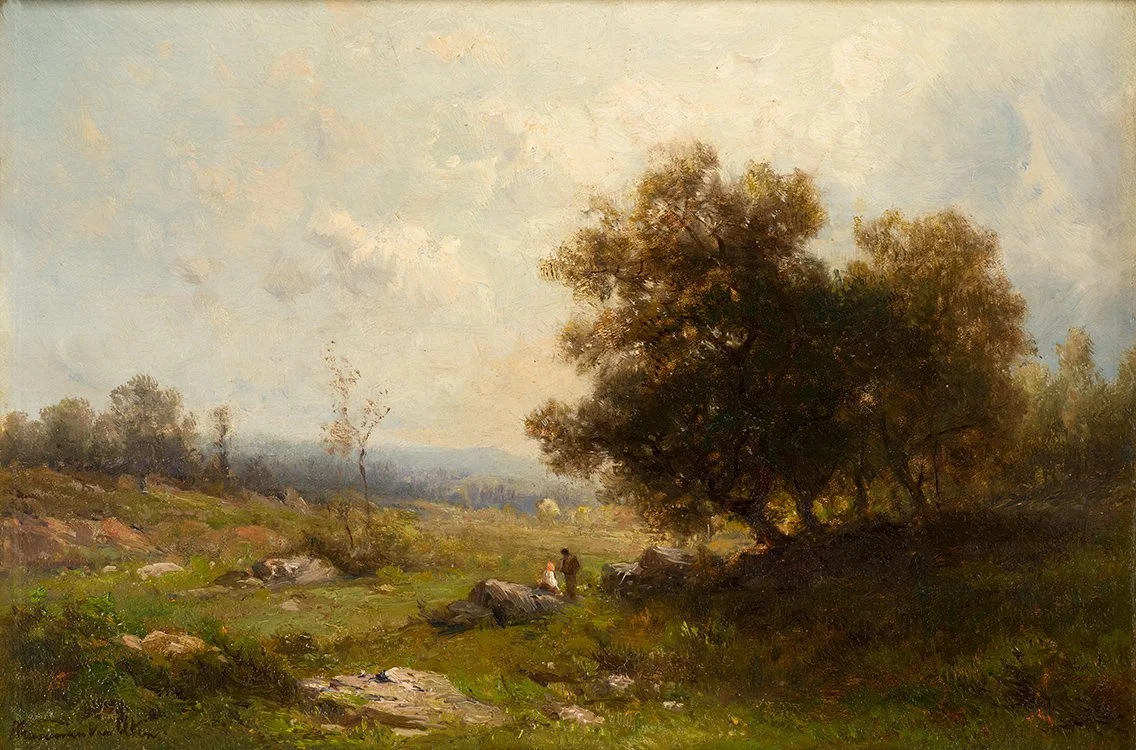
Landscape with Trees, undated. Stedelijk Museum Alkmaar (020053).
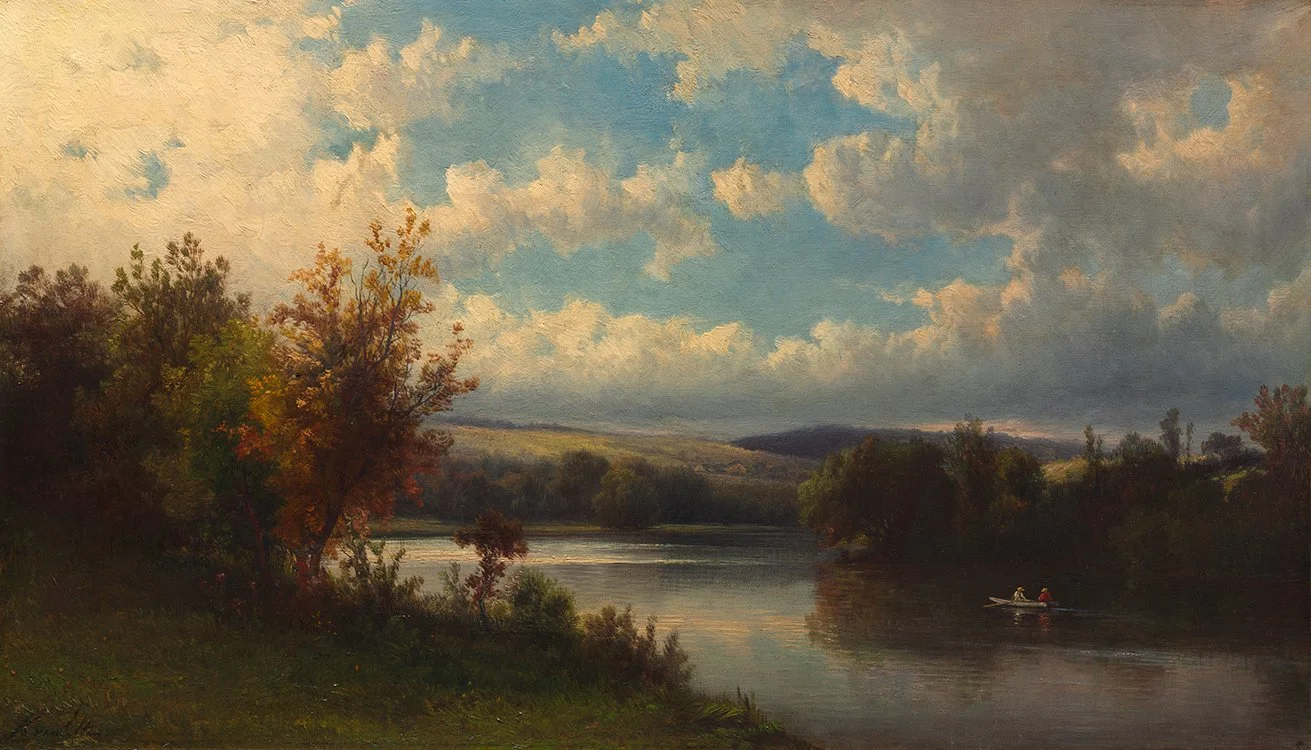
Landscape near Granby, Connecticut, ca. 1870s. Oil on canvas, 12.5 × 21.5 in. Cleveland Museum of Art (1915.690).
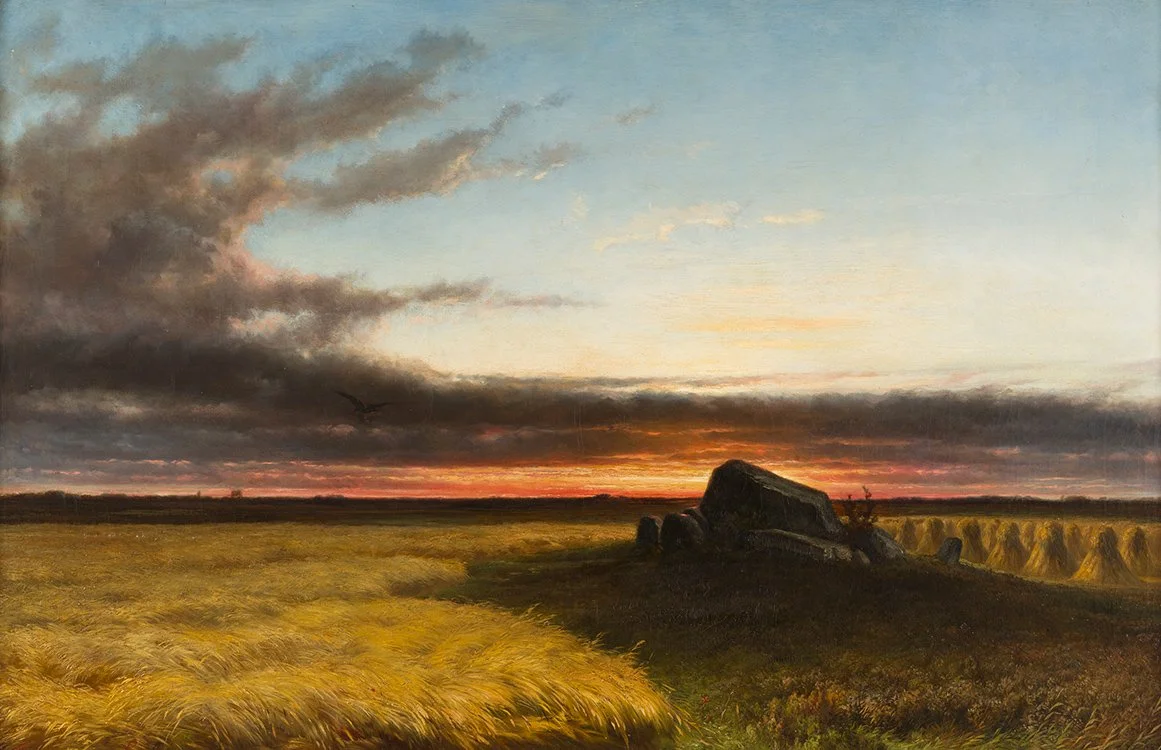
Hunebed (originally exhibited as Last Glow of Sunset), by 1860. Oil on canvas, 38.6 × 53.1 in. Stedelijk Museum Alkmaar (020532).
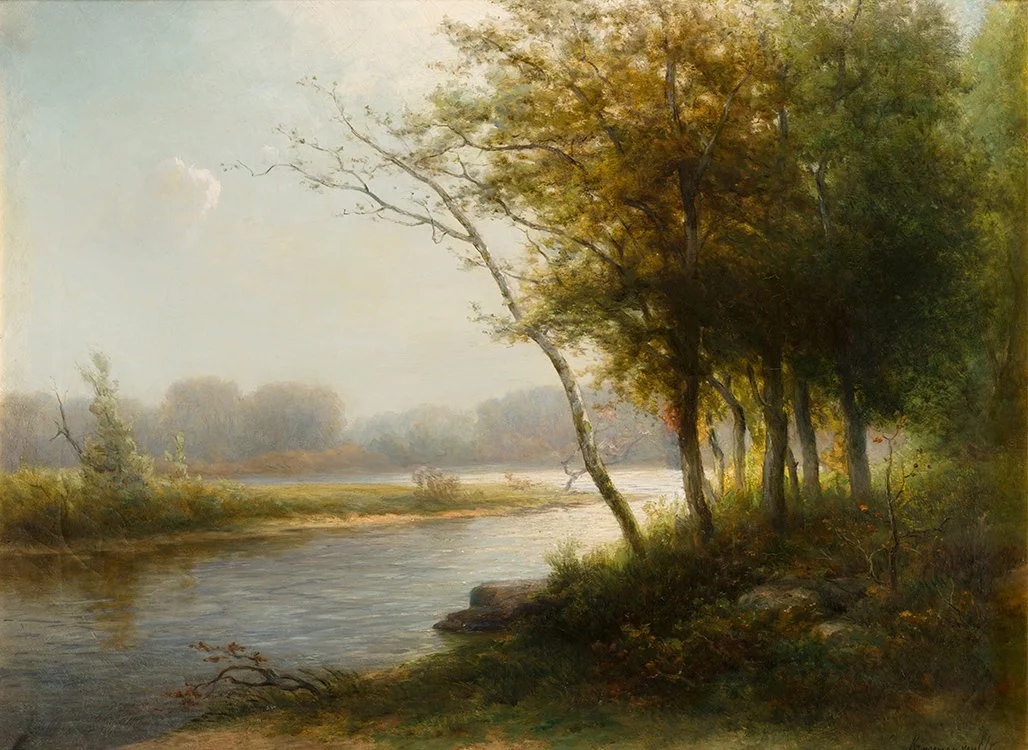
Morning at Little Falls, 1897. Oil on canvas, 39.8 × 49.6 in. Stedelijk Museum Alkmaar (021120).
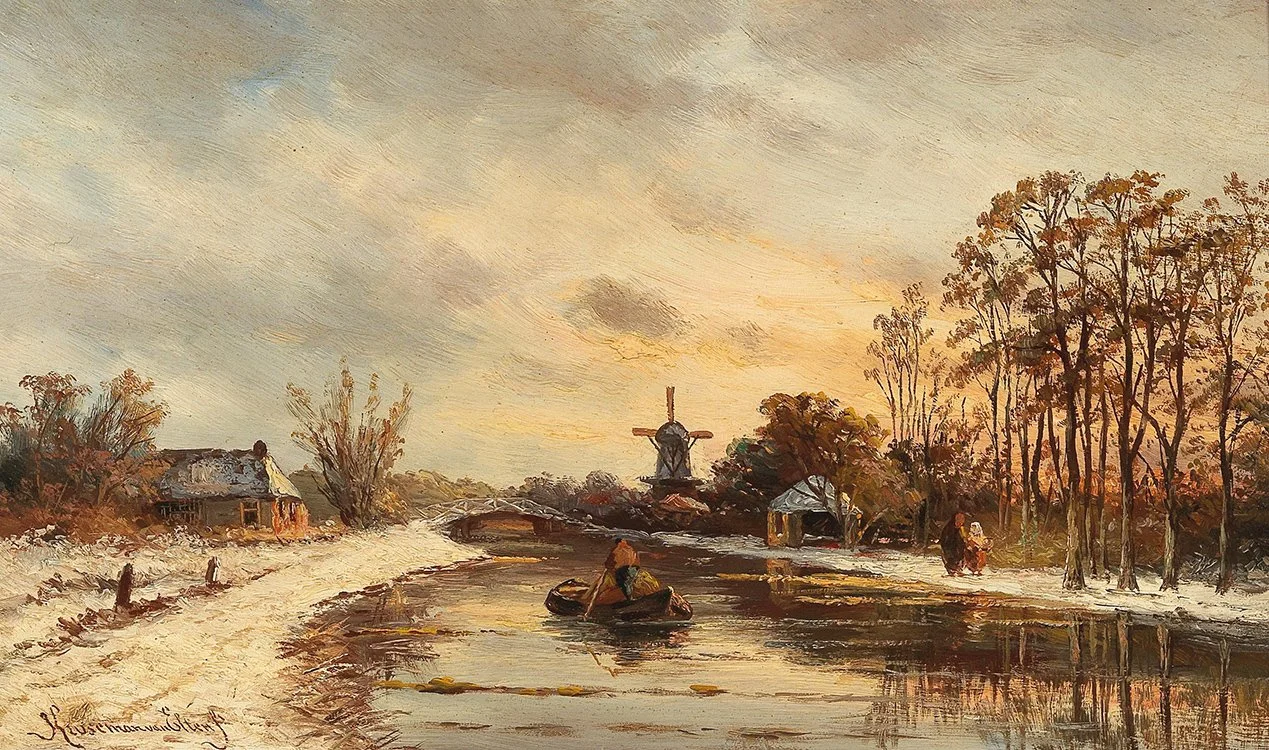
Winter Landscape with Windmill, undated. Oil on panel, 11.4 × 18.7 in. Private collection.
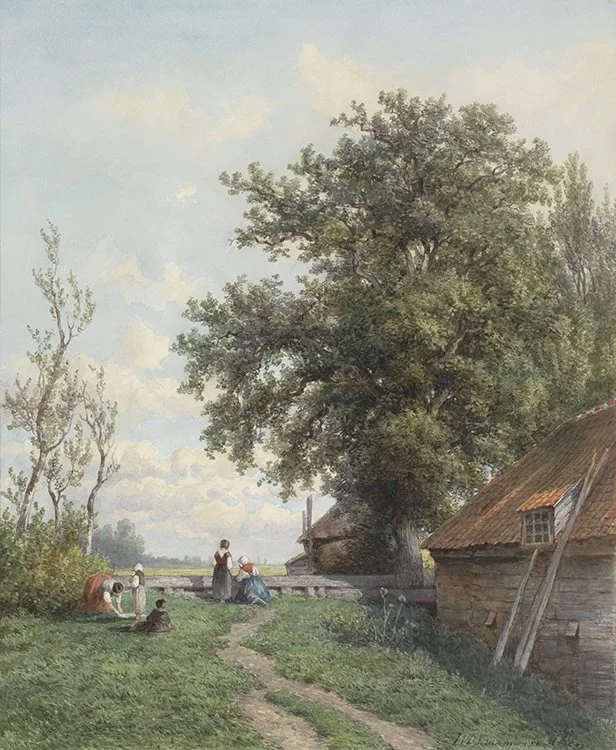
Farmyard with Several Figures, a Barn, and a Large Tree, undated. Watercolor on paper, 15.1 x 18.4 in. Rijksmuseum, Amsterdam (RP-T-FM-77).
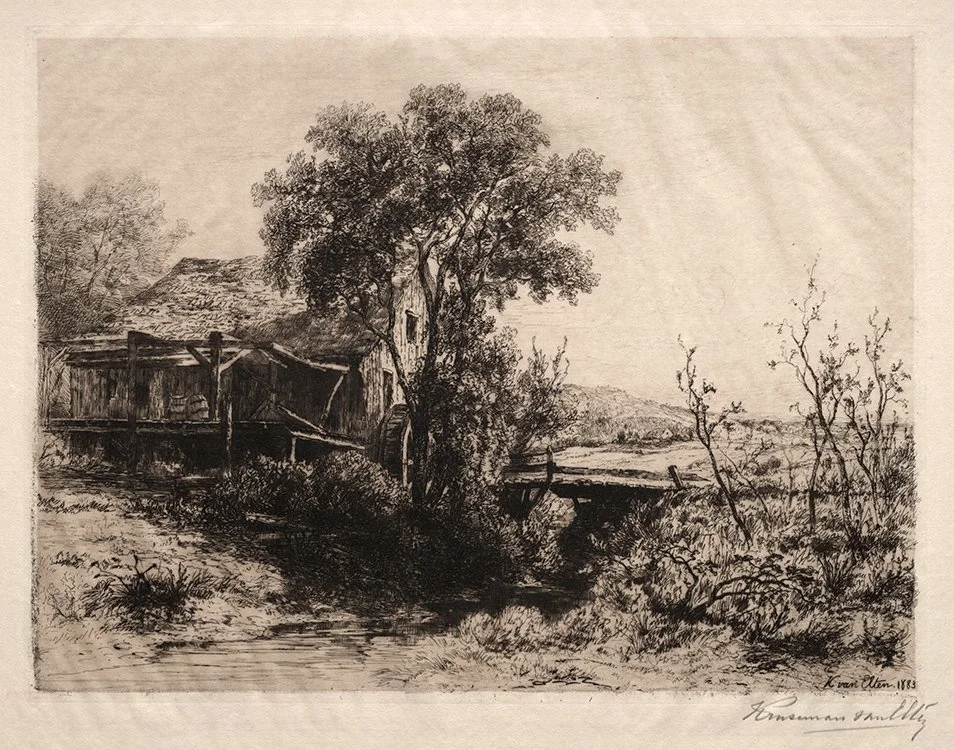
The Deserted Mill, 1883. Etching, 9.1 × 12.3. Cleveland Museum of Art (1919.689).
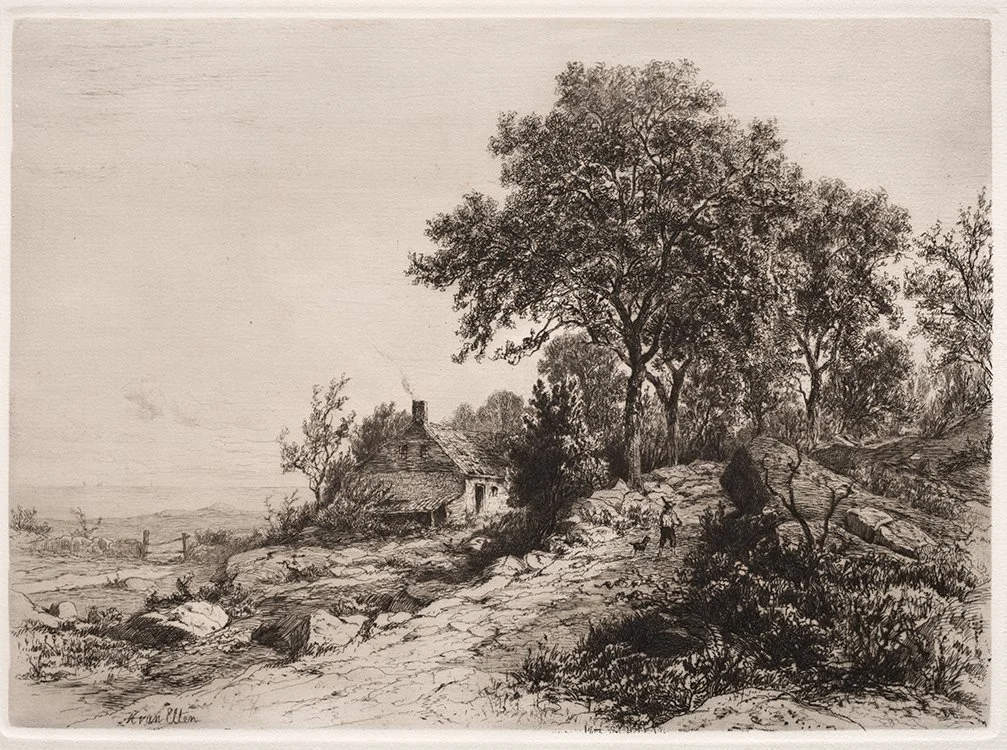
Cottage by the Sea, ca. 1885. Etching. Cleveland Museum of Art (1919.997).
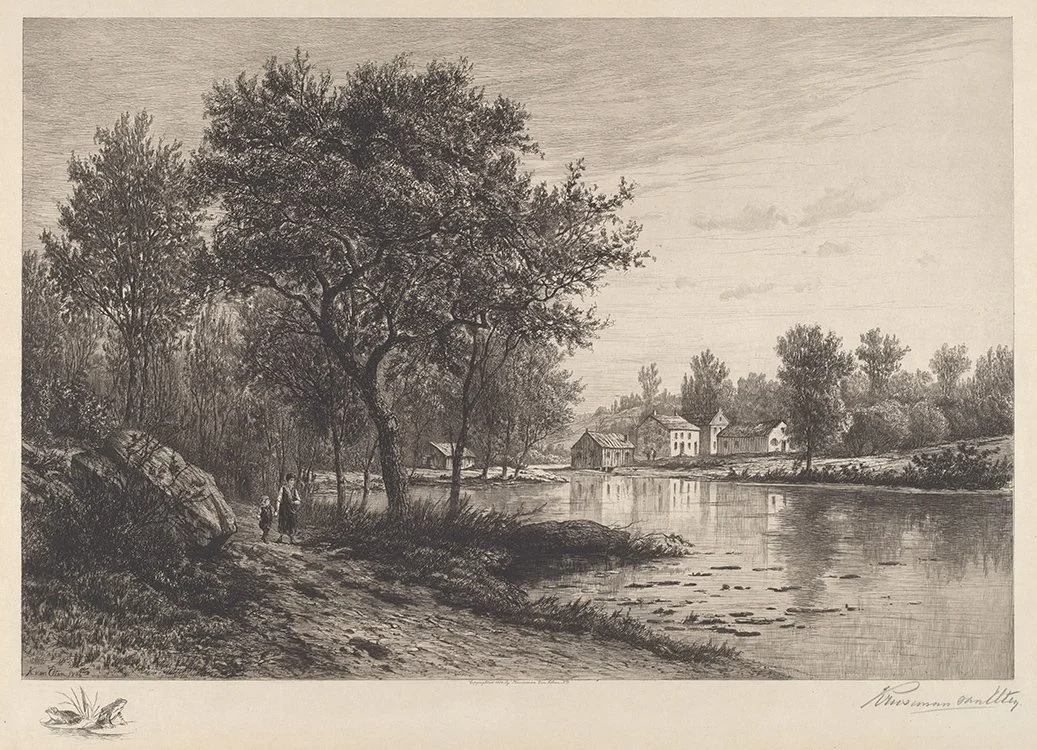
Untitled, 1886. Etching, 12.0 × 18.0 in. National Gallery of Art, Washington, D.C. (2008.115.4833).
Notes
1. Stedelijk Museum Alkmaar, “Jaarverslagen” (Annual Reports), April 22, 2025, Annual report (PDF).
2. National Academy of Design, “Hendrik Dirk Kruseman Van Elten,” artist record, accessed October 3, 2026, Artist record.
3. National Gallery of Art, “Hendrick Dirk Kruseman Van Elten,” artist record, accessed October 3, 2026, Artist record; Rijksmuseum, “Hendrik Dirk Kruseman van Elten,” artist record, accessed October 3, 2026, Artist record.
4. “Elten, Hendrik Dirk Kruseman van,” in Nieuw Nederlandsch Biografisch Woordenboek, vol. 3, ed. P. J. Blok and P. C. Molhuysen, Digitale Bibliotheek voor de Nederlandse Letteren, Digitized source.
5. Marjan van Heteren et al., Kruseman: Kunstbroeders uit de romantiek (Waanders, 2014), Digitized book (PDF).
6. H. M. Krabbé, “H. D. Kruseman van Elten,” Elsevier’s Geïllustreerd Maandschrift 3 (1893), Digitized source.
7. Van Heteren et al., Kruseman.
8. Krabbé, “H. D. Kruseman van Elten.”
9. Simonis & Buunk, “Hendrik Dirk Kruseman van Elten,” artist profile, accessed October 3, 2026, Artist profile.
10. Krabbé, “H. D. Kruseman van Elten.”
11. “Elten, Hendrik Dirk Kruseman van.”
12. Stedelijk Museum Alkmaar, “Jaarverslagen”; Pieter A. Scheen, “Hendrik Dirk Kruseman van Elten,” Lexicon Nederlandse beeldende kunstenaars 1750–1950, reproduced by Ensie, accessed October 4, 2026, Lexicon entry.
13. Stedelijk Museum Alkmaar, “Jaarverslagen.”
14. National Academy of Design, “Hendrik Dirk Kruseman Van Elten”; National Academy of Design, “James Craig Nicoll,” artist record, accessed October 4, 2026, Artist record.
15. National Academy of Design, “Hendrik Dirk Kruseman Van Elten.”
16. National Academy of Design, “Hendrik Dirk Kruseman Van Elten”; Krabbé, “H. D. Kruseman van Elten.”
17. Krabbé, “H. D. Kruseman van Elten.”
18. National Academy of Design, “Hendrik Dirk Kruseman Van Elten.”
19. National Gallery of Art, “Hendrick Dirk Kruseman Van Elten”; Krabbé, “H. D. Kruseman van Elten.”
20. National Academy Notes and Complete Catalogue (1885), 90, Digitized catalogue (PDF).
21. Van Heteren et al., Kruseman.
22. Van Heteren et al., Kruseman; Krabbé, “H. D. Kruseman van Elten.”
23. Krabbé, “H. D. Kruseman van Elten”; Columbia University, Reid Hall, “Artist Index, 1893–1914,” accessed October 4, 2026, Artist index.
24. Stedelijk Museum Alkmaar, “Jaarverslagen”.
25. Krabbé, “H. D. Kruseman van Elten.”
26. Krabbé, “H. D. Kruseman van Elten.”
27. S. R. Koehler, “The Works of the American Etchers: XIII. Kruseman van Elten,” The American Art Review 1, no. 11 (1880): 475–76, digital article; S. R. Koehler, “New Etchings by Kruseman van Elten,” The American Art Review 2, no. 11 (1881): 198, digital article.
28. Krabbé, “H. D. Kruseman van Elten.”
29. George William Sheldon, American Painters: With Eighty-Three Examples of Their Work Engraved on Wood (New York: D. Appleton and Company, 1879).
30. Stedelijk Museum Alkmaar, “Jaarverslagen”; National Gallery of Art, “Hendrick Dirk Kruseman Van Elten”; Rijksmuseum, “Hendrik Dirk Kruseman van Elten”.
31. National Academy of Design, “Hendrik Dirk Kruseman Van Elten”.
32. Metropolitan Museum of Art, Illustrated Catalogue: Paintings in the Metropolitan Museum of Art, New York (New York: Metropolitan Museum of Art, n.d.), Digitized catalogue.
33. Stedelijk Museum Alkmaar, “Jaarverslagen”.
34. Van Heteren et al., Kruseman.