James Webb
Recalling a 19th-century British marine and landscape artist.
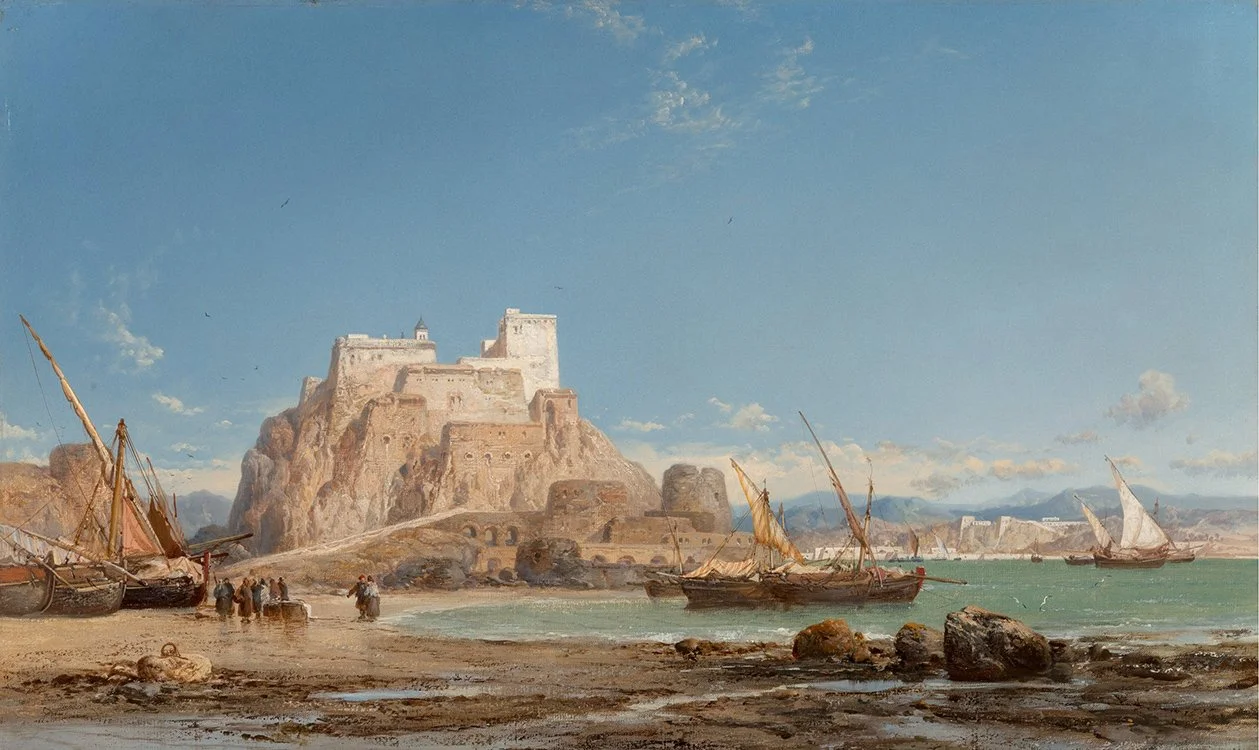
The Coast of Spain at San Feliu, 1873. Oil on canvas. Private collection.
James Webb (11 April 1835 – 9 March 1895) was a British painter known primarily for marine paintings, coastal scenes, and landscapes.⁽¹⁾ His subjects ranged from views of Britain to continental European landscapes, ports, and cities.⁽²⁾
Webb exhibited at the Royal Academy from 1853 to 1888⁽³⁾ and also showed works at the British Institution, the Society of British Artists in Suffolk Street, the New Watercolour Society, and the Grosvenor Gallery.⁽⁴⁾ His paintings are held in numerous public collections in Britain and abroad, including the Tate, Victoria and Albert Museum, Royal Museums Greenwich, and the National Gallery of Victoria.⁽⁵⁾
Early Life and Family
James Webb was born on 11 April 1835 at Glebe Place, Chelsea, London, the second son of the painter Archibald Webb and his wife Ellen (née de Lawtre). Although many published sources give Webb’s birth year as 1825, contemporary census records support the later date.
Webb’s father specialized in marine and coastal subjects and was a professor of drawing. Webb's elder brother, Byron Webb, was also a painter, known for sporting subjects, including hunting scenes and animals.⁽⁶⁾
Webb was identified as an artist from an early age: in the 1851 census, at the age of 15, he was listed as an “Artist Graduate.”⁽⁷⁾ He was a pupil of the marine painter Clarkson Frederick Stanfield, one of Victorian Britain’s foremost marine painters.⁽⁸⁾
By 1871, Webb was married to Jane Webb and was living in Hampstead as the head of a household that also included his parents, four other relatives, and four servants.⁽⁹⁾ In 1881, Webb and his wife were living at 43 Abbey Road, Marylebone, with his 89-year-old father and several other members of the household.⁽¹⁰⁾
Career
Webb began exhibiting at the Royal Academy in 1853, while still a teenager, and continued to exhibit there regularly until 1888.⁽¹¹⁾ Over the course of his career he also exhibited at the British Institution, the Society of British Artists, the New Watercolour Society, and the Grosvenor Gallery.⁽¹²⁾
In 1871, his painting Brighton in the Season sold for £498 15s to a buyer identified as S. Rucker.⁽¹³⁾ Another work from approximately the same period (or possibly the same painting—see below), Brighton from the West Pier (c. 1870), was painted jointly with George Earl and is now in the collection of Brighton & Hove Museums.⁽¹⁴⁾
In February 1872, three works by Webb (Ehrenbreitstein, on the Rhine, Cadiz—Spain, and Brighton in the Season) were offered at auction in New York by Geo. A. Leavitt & Co., in a sale that also included works by American painters including Thomas Cole, Asher Brown Durand, and John Frederick Kensett.⁽¹⁵⁾
Webb continued painting into the final years of his life. At the time of his death in 1895, the Nottingham Evening Post described him as a “well-known landscape painter” and identified Brighton in the Season as his most important work, noting that it had been sold to an American purchaser “for a very large sum.”⁽¹⁶⁾
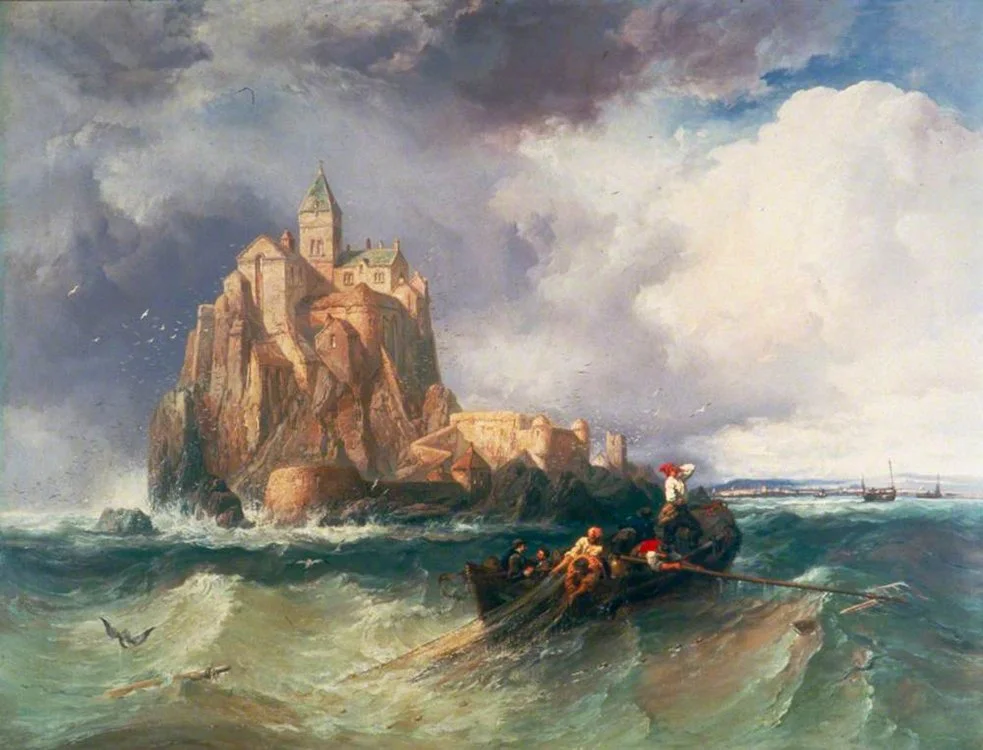
Mont St Michel, France, 1868. Oil on canvas. Guildhall Art Gallery, London (1062).
Art and Subjects
Webb painted marine subjects, coastal scenes, landscapes, and views of towns and cities. His subjects spanned Britain and continental Europe, including England, Wales, France, Spain, Italy, Holland, the Rhine, and Constantinople.⁽¹⁷⁾ His paintings frequently emphasize changing weather, atmospheric distance, and the effects of light upon water and landscape. Ships, fishermen, travellers, architecture, and other human elements often occupy relatively small portions of compositions dominated by sky, water, or terrain.⁽¹⁸⁾ His style has been described as robust and naturalistic, characterized by a relatively pale palette, with influence from J. M. W. Turner.⁽¹⁹⁾
Contemporary critics commented favourably on Webb's technique and reputation. In a review of Scene near Snowdon and The Old Mill, The Art Journal praised his handling of light and dark as extremely skilful.⁽²⁰⁾ In 1868, the journal praised his large Port of Rotterdam for its treatment of light, reflections, and figures, describing it as “by far the most important production of its class” to have appeared in recent years.⁽²¹⁾ In another review, The Art Journal described Webb as an “excellent artist” who had recently attained “the high position to which he has been long entitled.”⁽²²⁾
Art UK records 52 works by Webb in UK public collections.⁽²³⁾
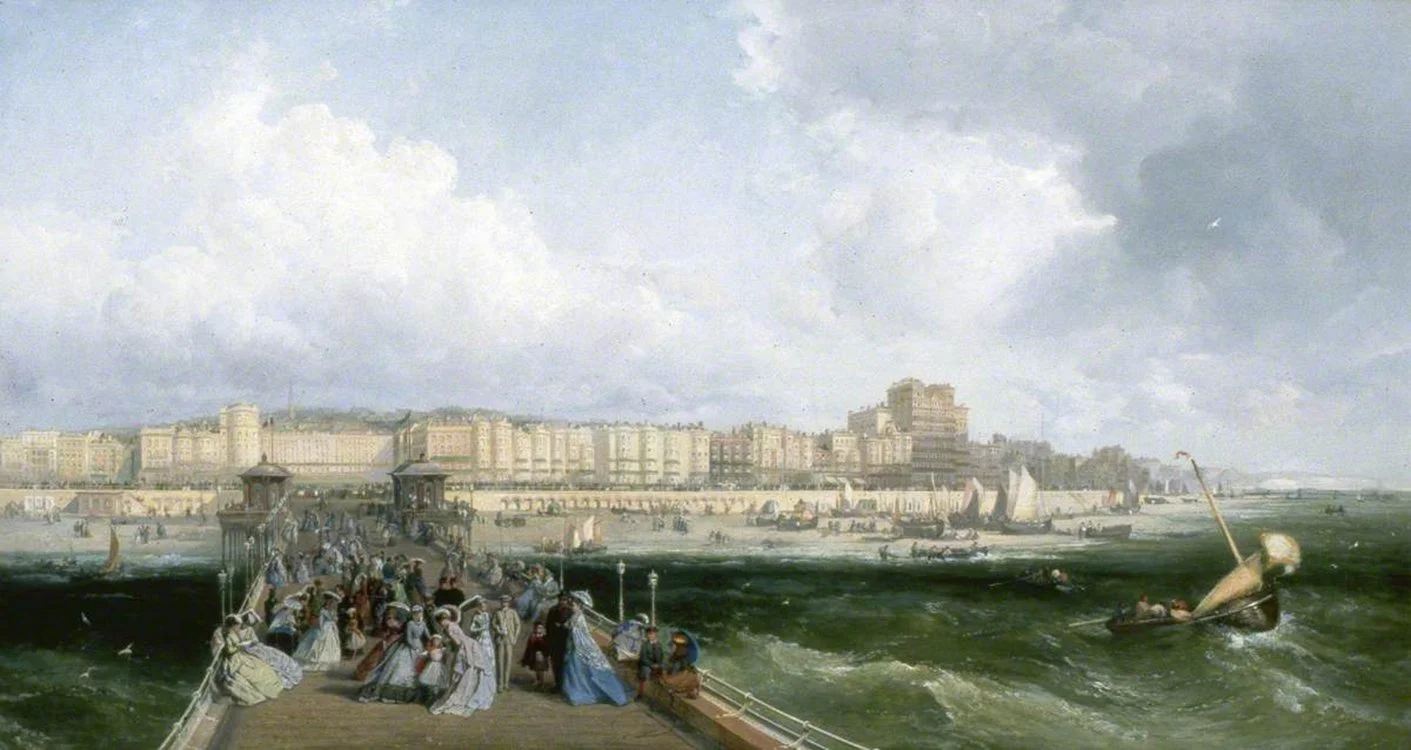
James Webb and George Earl, Brighton, East Sussex, from the West Pier, c. 1870. Oil on canvas. Brighton & Hove Museums (FA000018).
Brighton in the Season: a Lost Masterpiece?
Among James Webb's most celebrated paintings was Brighton in the Season, a work that appears prominently in historical records before seemingly disappearing from view.
George Redford's Art Sales: A History of Sales of Pictures and Other Works of Art records the painting's sale in 1871 for £498 15s—equivalent to approximately $68,000 in 2026 U.S. dollars.⁽²⁴⁾
The following year, Brighton in the Season appeared in New York at the Clinton Hall Sale Rooms, where Geo. A. Leavitt & Co. conducted a two-evening auction on February 7–8, 1872. The sale, advertised as Catalogue of Important and Choice Modern Paintings by Eminent American & Foreign Artists, included paintings by Thomas Cole, John Frederick Kensett, and other prominent artists.
In a surviving copy of the catalogue, the number “2900” is handwritten beside the listing for Webb's painting. Similar annotations appear throughout the catalogue, suggesting that these figures may record realized sale prices. If so, Brighton in the Season fetched $2,900—approximately $80,000 in today's U.S. dollars.⁽²⁵⁾
Following Webb's death in 1895, the Nottingham Evening Post described Brighton in the Season as his most important work, noting that it had been sold to an American purchaser for a substantial sum.⁽²⁶⁾
Despite this prominence, no subsequent record of Brighton in the Season has been securely identified.
Has Brighton in the Season Been Hiding in Plain Sight?
Titles of paintings are not always permanent. Artworks can acquire new names as they pass between owners, dealers, auction houses, and museums.
Brighton & Hove Museums holds a large canvas titled Brighton, East Sussex, from the West Pier, dated to approximately 1870. The work is attributed jointly to James Webb and George Earl, who is known to have collaborated with Webb by painting figures into his larger compositions.⁽²⁷⁾
The painting's subject is strikingly consistent with the title Brighton in the Season. Elegantly dressed visitors promenade along the West Pier, while the working life continues on the waves and waterfront beyond. The juxtaposition captures the town's identity as both a thriving maritime community and a destination for fashionable seasonal society. Clearly, the painting depicts Brighton in season.
The painting's date also aligns with the documented history of Brighton in the Season, while its ambitious composition distinguishes it from many of Webb's more conventional coastal views.
Could the painting in Brighton & Hove Museums be the celebrated work that disappeared from the historical record after 1872?
For now, the identification remains speculative. No documented provenance has been established connecting the museum's painting to the 1871 British sale or the 1872 New York auction. Nevertheless, the correspondence in subject, chronology, and composition presents an intriguing possibility.
Incidentally, Brighton & Hove Museums purchased the painting in 1950 for £10 10s—equivalent to approximately $625 in 2026 U.S. dollars.⁽²⁸⁾
Researched and written by Blake Manning, 2026.
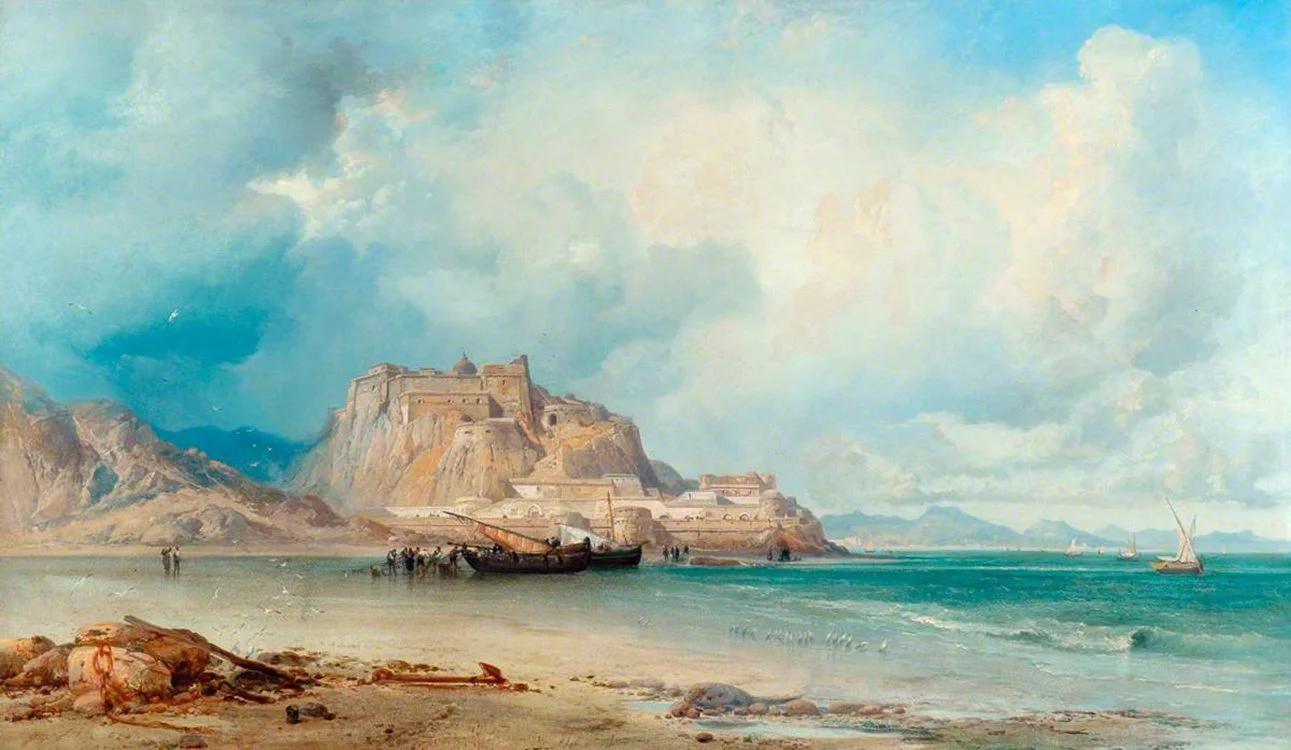
Cartagena, Spain, undated. Oil on canvas. Kirklees Museums and Galleries (1985.2594).
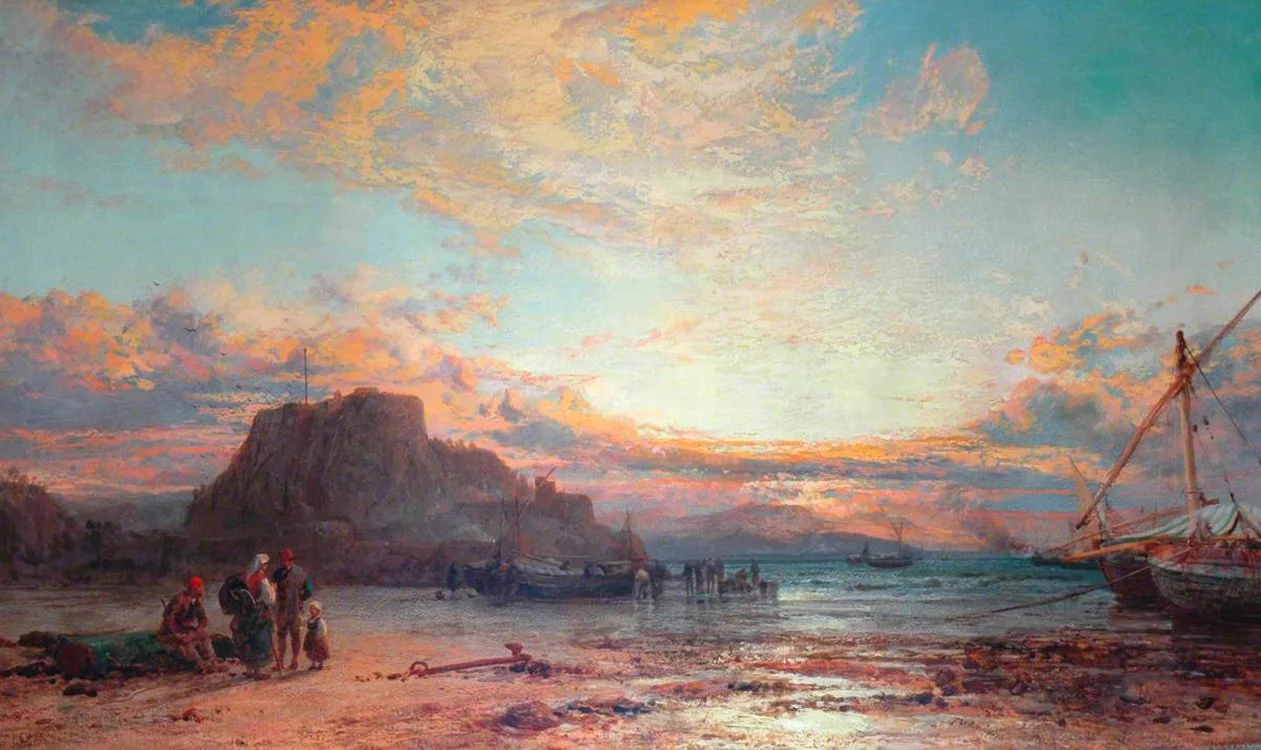
Cartagena, Spain, undated. Oil on canvas. Kirklees Museums and Galleries (1989.204).
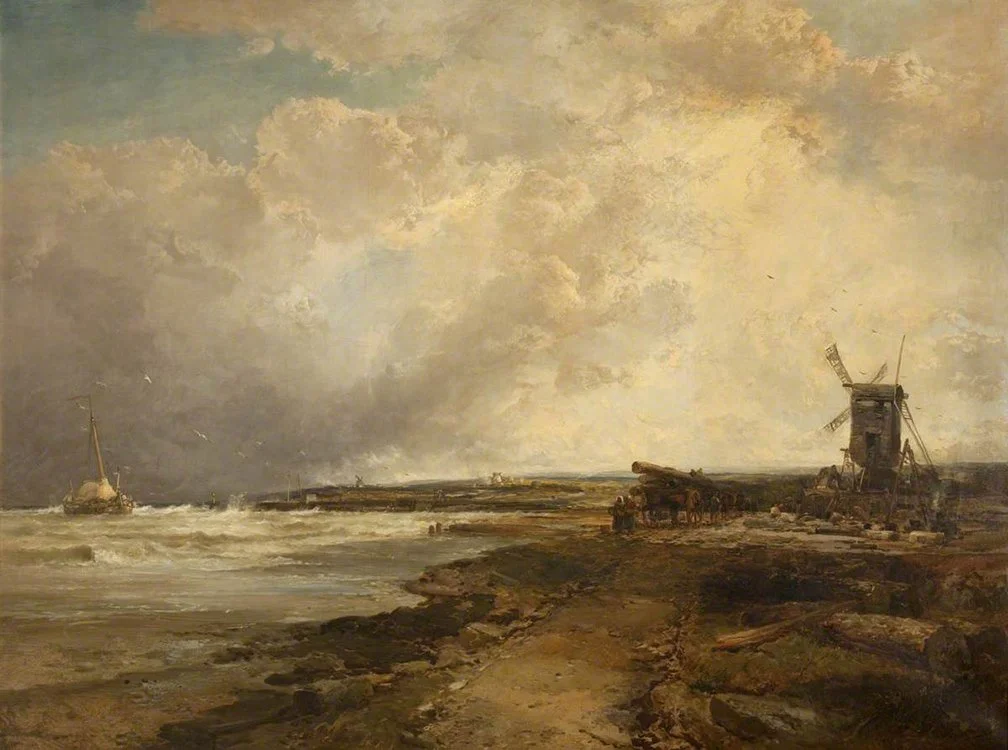
After a Thunderstorm on the Sussex Coast, undated. Oil on canvas. Towneley Hall Art Gallery and Museum, Burnley (BURGM-paoil22).
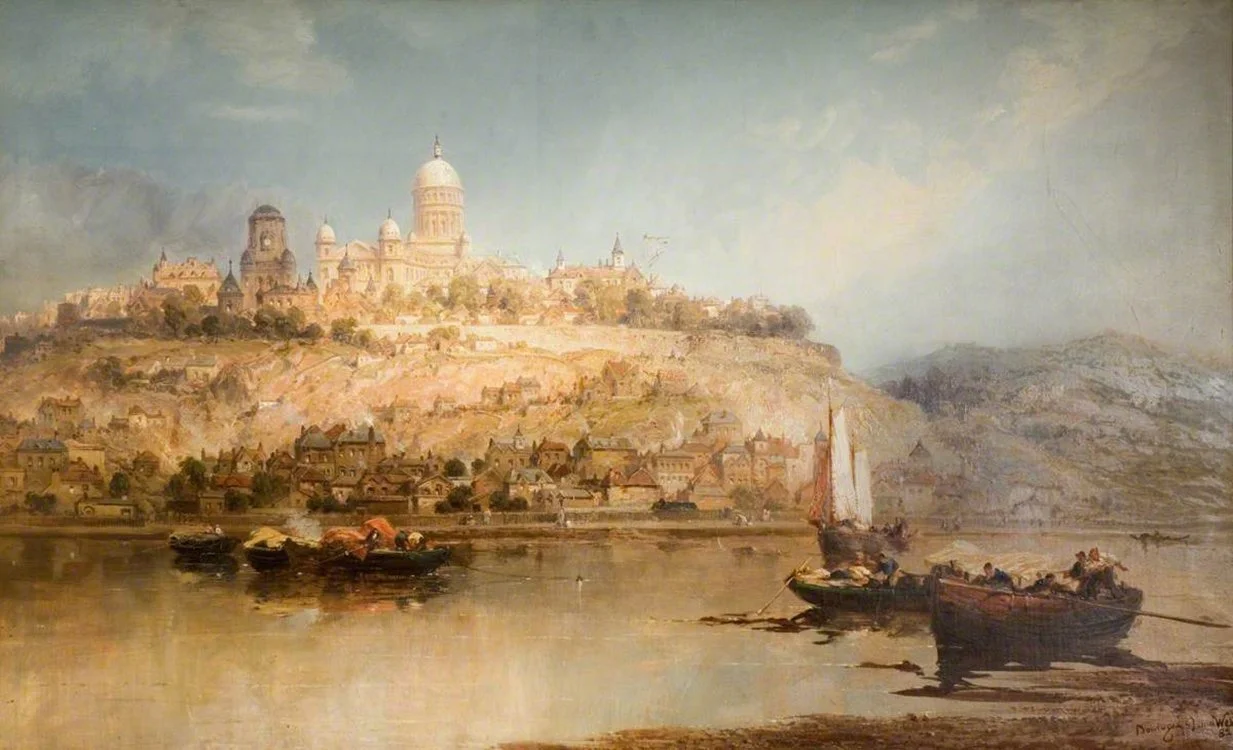
Boulogne, undated. Oil on canvas. Wolverhampton Art Gallery (OP732).
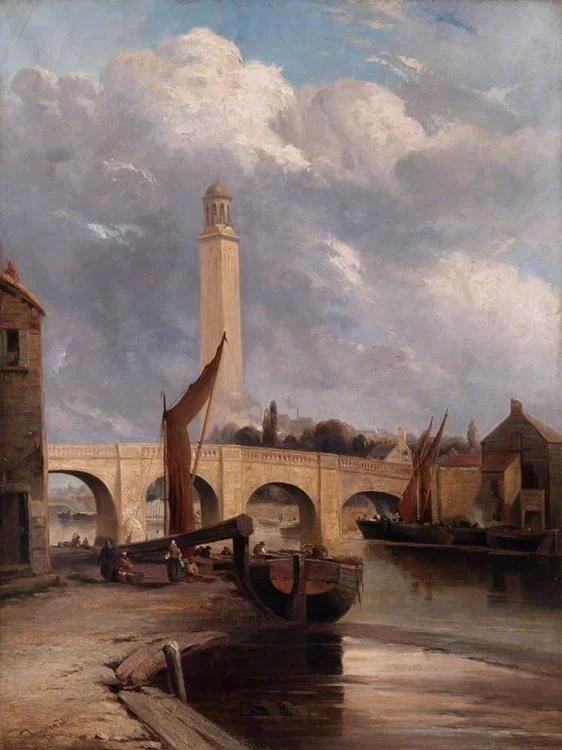
Kew Bridge, Surrey, undated. Oil on canvas. Orleans House Gallery, Twickenham (LDORL 00695).
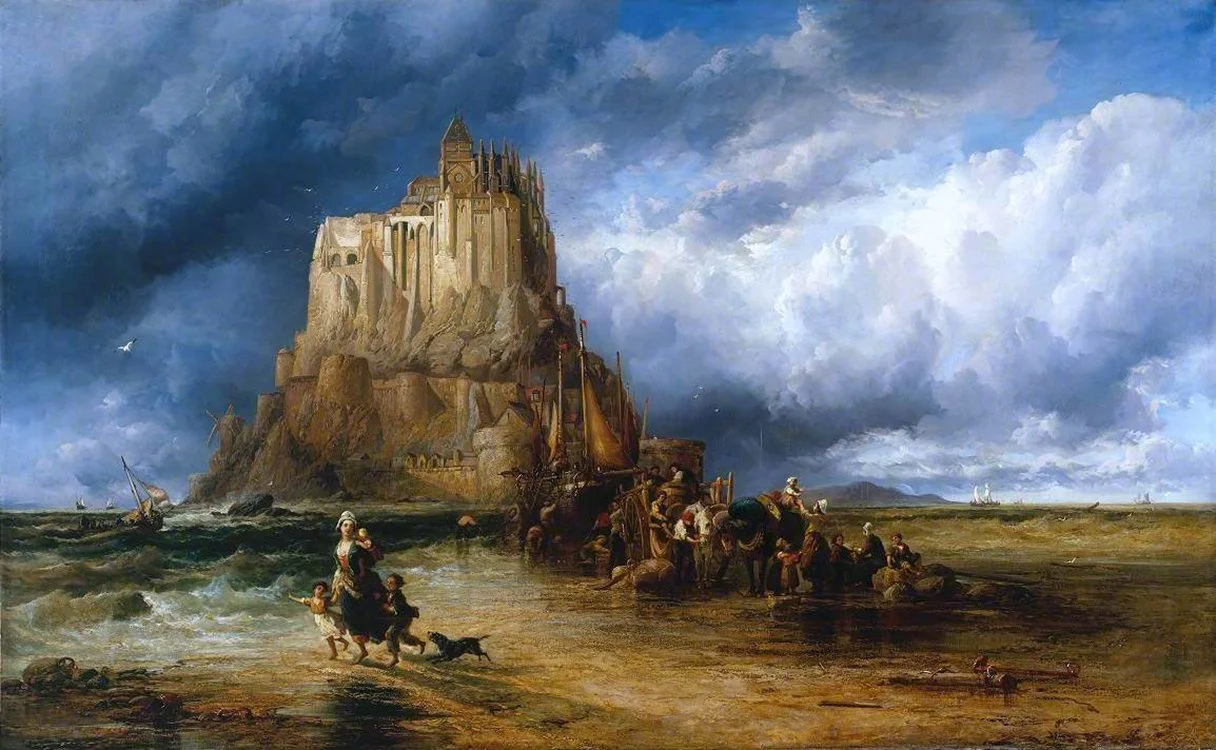
Mont St Michel, Normandy, undated. Oil on canvas. Tate, London (N01684).
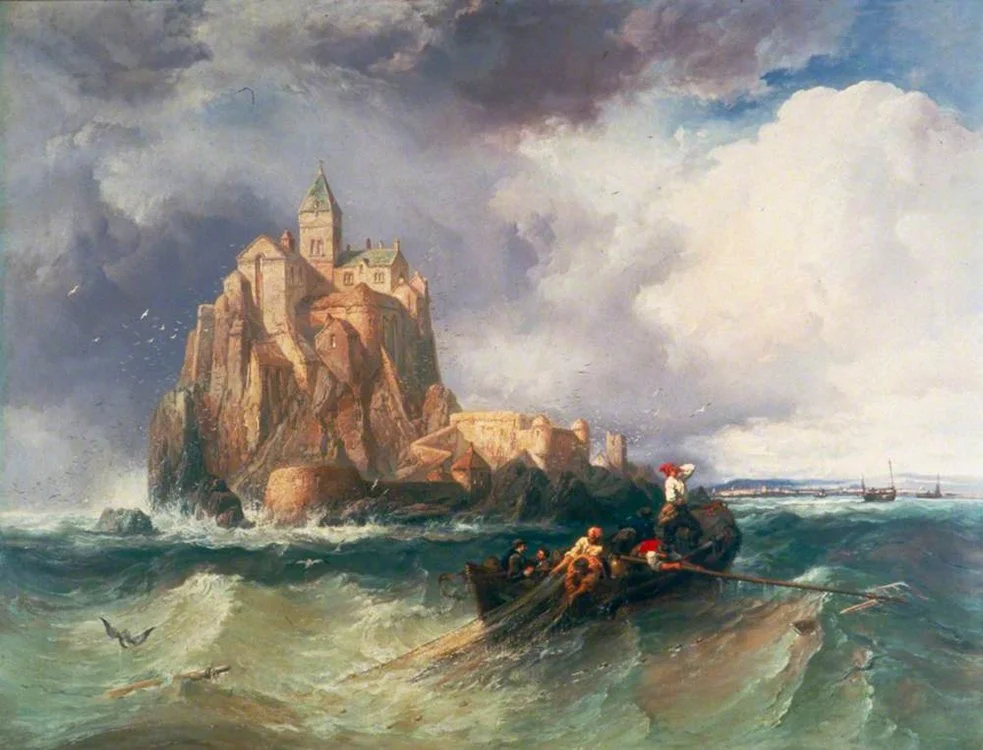
Mont St Michel, France, 1868. Oil on canvas. Guildhall Art Gallery, London (1062).
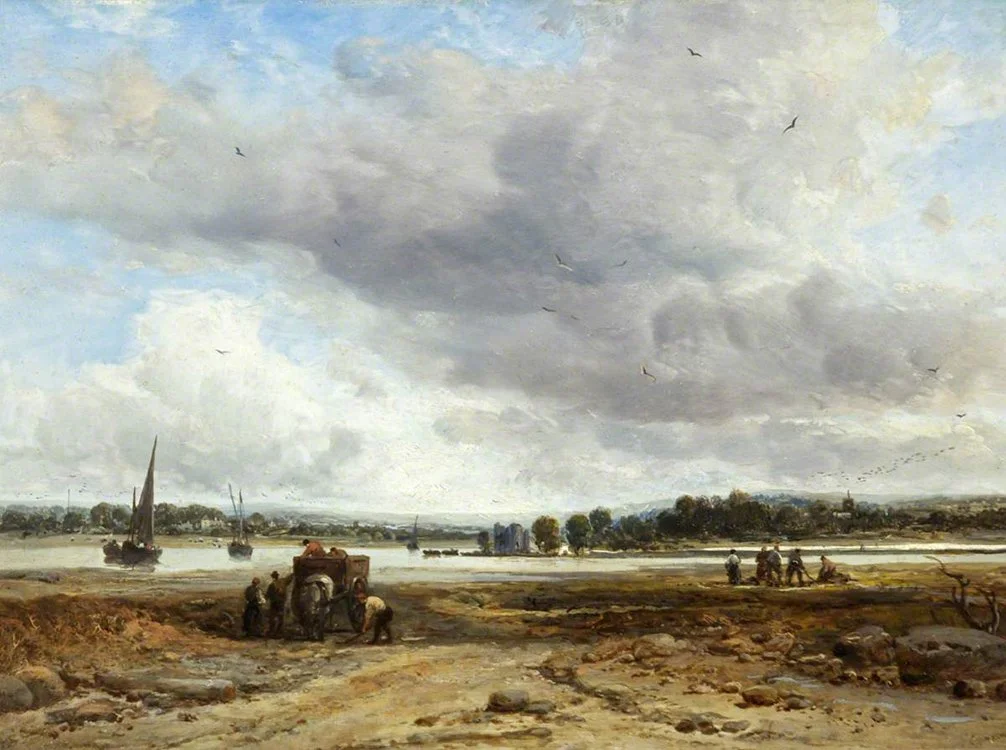
Calshott Castle, near Southampton, undated. Oil on canvas. Bristol City Museum and Art Gallery (K2183).
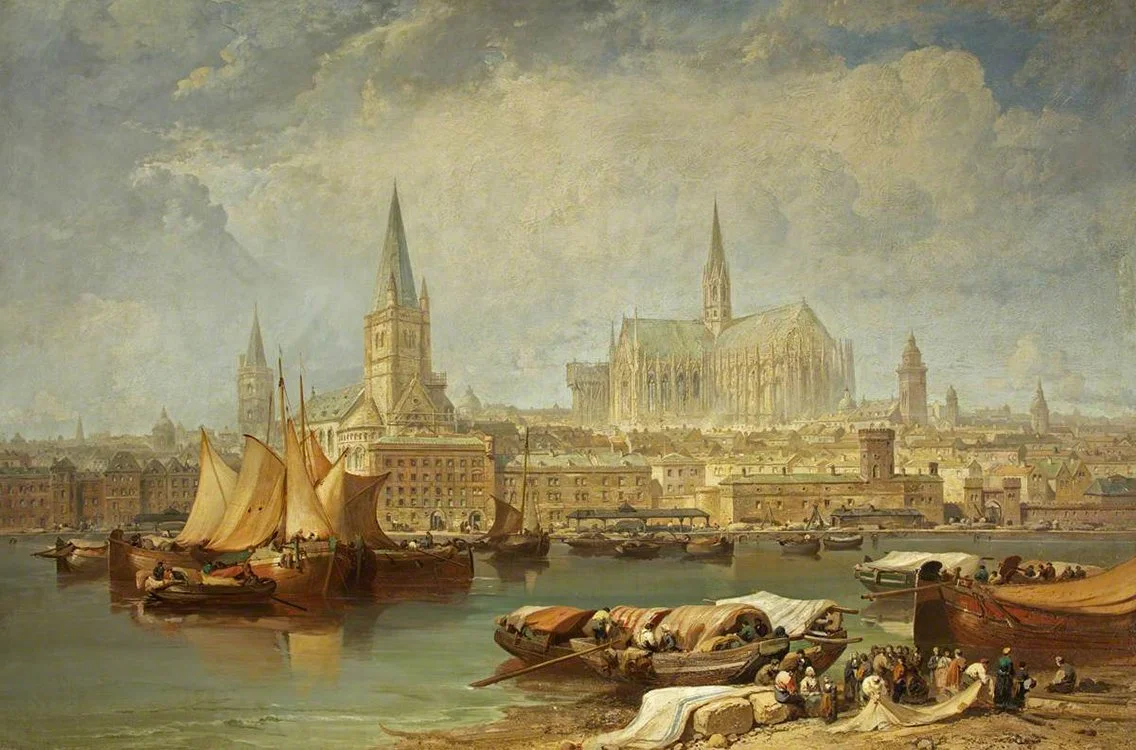
Cologne Cathedral, 1869. Oil on canvas. Bristol City Museum and Art Gallery (K16).
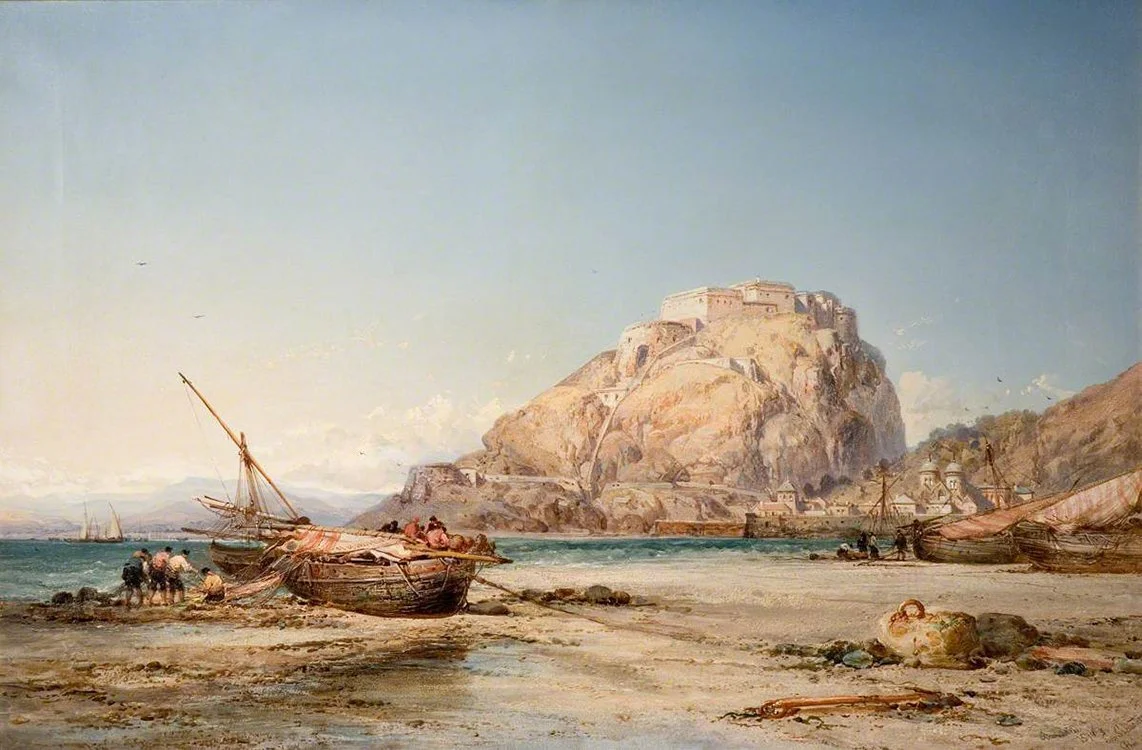
San Sebastian, 1874. Oil on canvas. Wolverhampton Art Gallery (OP734).
Notes
1. Art UK, “Webb, James, 1835–1895,” Artist profile.
2. Artnet, “Biographie de James Webb,” Artist biography.
3. Artnet, “Biographie de James Webb.” Artist biography.
4. Royal Museums Greenwich, “A Swim-Headed Barge,” Collection record.
5. Art UK, “Webb, James, 1835–1895,” Artist profile; National Gallery of Victoria, “Lock on the Thames, James Webb,” Collection record.
6. Christie’s, “James Webb (1825–1895), The Lock,” Auction record.
7. “1851 England Census,” Chelsea, Middlesex, HO107/1473, fol. 177, p. 7, Census image.
8. Christie’s, “James Webb (1825–1895), The Lock,” Auction record.
9. “1871 England Census,” Hampstead, Middlesex, RG10/193, fol. 63, p. 53, Census image.
10. “1881 England Census,” Marylebone, Middlesex, RG11/164, fol. 65, p. 9, Census image.
11. Artnet, “Biographie de James Webb.” Artist biography.
12. Royal Museums Greenwich, “A Swim-Headed Barge,” Collection record.
13. George Redford, Art Sales: A History of Sales of Pictures and Other Works of Art, vol. 2 (London: Bradbury, Agnew & Co., 1888), 126.
14. Brighton & Hove Museums, “Brighton from the West Pier, James Webb & George Earl, c. 1870,” Museum article.
15. Geo. A. Leavitt & Co., Catalogue of Important and Choice Modern Paintings, by Eminent American & Foreign Artists (New York, 1872), 17, 29, 43.
16. “Obituary,” Nottingham Evening Post (March 15, 1895): 2, Newspaper scan.
17. Sotheby’s, “James Webb: The St. Sophia Gate, Constantinople,” Auction record.
18. Web Gallery of Art, “James Webb,” Artist/work record.
19. Christie’s, “James Webb (1825–1895), The Lock,” Auction record.
20. “Scene near Snowdon” and “The Old Mill,” review, The Art Journal 46 (1884).
21. “Port of Rotterdam,” review, The Art Journal 30 (1868): 123.
22. Review of James Webb, The Art Journal (1872).
23. Art UK, “Webb, James, 1835–1895,” Artist profile.
24. Redford, Art Sales, 2:126.
25. Geo. A. Leavitt & Co., Catalogue of Important and Choice Modern Paintings (1872), 17, 29, 43. The handwritten annotation “2900” may represent a sale price.
26. “Obituary,” Nottingham Evening Post, March 15, 1895, 2.
27. Brighton & Hove Museums, “Brighton from the West Pier, James Webb & George Earl, c. 1870,” Museum article.
28. Brighton & Hove Museums, correspondence with the author concerning the November 1950 acquisition of Brighton, East Sussex, from the West Pier, September 23, 2026.